Canada Posts

2007/01/30

Sentinels From Prehistory
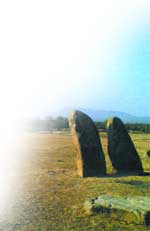

Megaliths

Hazaribagh's prehistoric megaliths are finally receiving the academic and popular attention they deserve. Subhashis Das has been working tirelessly to preserve them and started the Megalithic Utsav at Punkhri- Barwadih two years ago to generate awareness about these sentinels from the remote past. The Utsav is held on the morning of the two equinoxes each year, when the sun can be seen rising through the V-shaped gap between a pair of tall megaliths. This beautiful astronomical sight can be seen only on equinox mornings here. It?s a rare, spectacular phenomenon, says Das, who quit his job to research and popularise the megaliths full-time. These ancient stones were actually superb astronomical-astrological observatories, says Das, who has discovered three megalithic observatories in Jharkhand.

Source

2007/01/27

Keenlyside heads Museum and Heritage Foundation


A permanent executive director has been hired to head the P.E.I. Museum and Heritage Foundation. Dr. David L. Keenlyside, curator of Atlantic Archaeology at the Canadian Museum of Civilization in Ottawa, will be assuming the duties in March.
"This appointment is a crucial step in strategic planning for the museum," says Dr. Dasgupta, chair of the board of governors. "We look forward to Dr. Keenlyside's arrival." Elmer MacFadyen, P.E.I.'s minister of community and cultural affairs, says Dr. Keenlyside's colleagues at the Canadian Museum of Civilization in Ottawa highly recommend him and praise him for his interpersonal, organizational and project management skills, his work ethic, and his ability to foster a good working re lationship with crews, volunteers and exhibition teams.
This is the first permanent appointment to the position since the retirement of Chris Severance, who served as executive director from 1992 to 2004.

2007/01/17

Stonehenge most likely didn't stand alone


The world famous Stonehenge in the plains of Salisbury in southern England that has intrigued anthropologists and archaeologists for centuries did not stand in isolation, but was juxtaposed between two more world famous prehistoric stone formations.

Stonehedge


One of the megalithic finds is a sandstone formation that marked a ritual burial mound. The other is a group of stones at the site of an ancient timber circle.

Colin Richards of Manchester University and Joshua Pollard of Bristol University who made the discoveries have suggested that many similar monuments might have been erected in the shadow of Stonehenge, possibly forming part of a much larger complex.

The first monument, a 9.2-foot-long (2.8-meter-long) sarsen stone was found lying in a field next to the River Avon, two miles (3.2 kilometres) east of Stonehenge, which is located near the modern-day city of Salisbury.

More of this

2006/12/31

Landmark Exhibition Of Asian Textiles At The Textile Museum


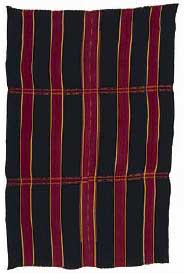
A landmark exhibition of textiles of the Chin peoples of western Myanmar (Burma), northeastern India and eastern Bangladesh will be on view at The Textile Museum from October 13, 2006 ? February 25, 2007. Mantles of Merit: Chin Textiles from Mandalay to Chittagong includes nearly 80 ceremonial mantles, tunics and other garments, along with contemporary and historic photographs as well as jewelry and accessories worn with the textiles.
Landmark Exhibition Of Asian Textiles

Textiles play a central role in Chin social life, illustrating an individual?s success in achieving merit in this life and the next through worldly activities such as hosting feasts and bagging big game. The majority of the textiles on view are from The Textile Museum?s collections, which was formed in large part by a donation to the Museum by the exhibition?s curators, Dr. David W. Fraser and Barbara G. Fraser.


Technique and Structure in Chin Textiles

2006/11/19

Lecture Looks at 1604 St. Croix Settlement


Archaeologist Pendery discussed the newest information on the archaeological excavations of the first French settlement in the New World in 1604. Samuel de Champlain was one of 79 men who chose to set up a trading post on St. Croix Island at the mouth of the St. Croix River, today located at the boundary of Maine and Canada. Almost half of the men died the first winter due in part to the harsh climate. The following year the trading post was moved to the Canadian shore at Port Royal.

The excavations on St. Croix Island, conducted jointly by the U.S. National Park Service and Canadian scholars, have found the sparse but intriguing remains of this first French settlement.

More news about Ongoing Events

Investing In A Region's Future


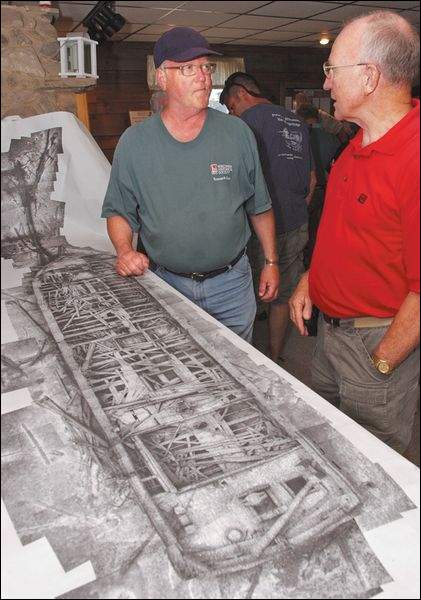
A small and unobtrusive research institute at the University of Connecticut's Avery Point campus thinks it has found the remains of the Bonhomme Richard, the ship commanded by Continental Navy captain John Paul Jones off England in 1779.

The project was mentioned briefly during a symposium on maritime history earlier this week at the Avery Point campus. Its significance calls for some additional elaboration and attention in this region, which continues to grapple with the future. The project, organized and directed by the nonprofit Ocean Technology Foundation, fits perfectly into a role for the region as a center for maritime research and exploration linking the past and future.

The Institute undertook the project three years ago, joining historical data and state-of-the-art undersea technology. This included the development of a computer model of the ship showing how the damaged hull would have drifted. The ship sank in a celebrated battle off the northeast coast of England. Jones and his crew abandoned the heavily damaged ship and fought their way aboard and captured the HMS Serapis in the storied battle, in which Jones uttered the famous line, ?I have not yet begun to fight.?

This short article : Marine archaeology is a specialized mission

2006/10/18

Just the Artifacts


The Palisades area, with its proximity to the Potomac and the various creeks that fed into it, was more than just a pleasant spot for ancient Washingtonians; it was critical to their survival. The anadromous fish migrations?shad and striped bass running back to spawn in their native streams?that drive modern-day sportsmen onto the river each spring coincides with what was the ancient Indians? leanest time of year.


Just when they had depleted their winter stores and before the berries appeared or cultivated crops could be harvested, they received tens of thousands of pounds of protein in the form of schools of fish so thick that 17th-century explorer John Smith tried to catch them with frying pans. If anything, Dupin?s findings verify the impression archaeologists have about the area?s density of materials. ?The mantra of today?s real-estate agent also holds in prehistory: location, location, location,? says Stephen Potter, the regional archaeologist for the National Park Service (NPS). ?Prime real estate is and always will be on the waterfront.?

More on this !

2006/10/14

Plenty to Trade


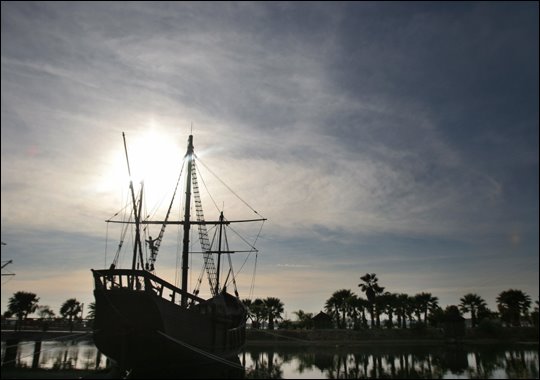
A replica of Caravel Pinta is seen at Palos de la Frontera's wharf, where Columbus set off for America in the 15th century. New research on Columbus' exploration of Cuba reveals that he and his crew traded ordinary shoelace tags for gold with the indigenous islanders, who valued the brass objects more highly than the then-abundant gold available to them.

2006/09/18

Archaeological dig suggests nomads built homes


MASHANTUCKET, Conn. -- A long-held theory about the migrations of ancient inhabitants of eastern Connecticut might change in light of an archaeological dig that has unearthed homes built into a hillside.

Researchers had long believed that the native people who lived in the region about 9,000 years ago were nomadic hunters who moved frequently and did not create permanent living spaces.

But an archaeological dig taking place near a Foxwoods Resort Casino parking garage has uncovered dozens of pit houses, structures built into a hill and supported by timbers.


Click here to find out more!

Discoveries in a Gibraltar cave suggest over closest relative was closer than previously thought


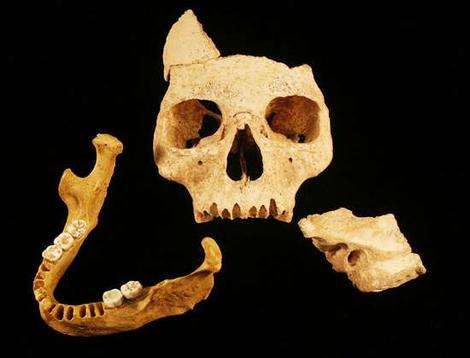
Primitive stone tools and remnants from wood fires recovered from the vast Gorham's cave on the easternmost face of the Rock suggest Neanderthals found refuge there, and clung to life for thousands of years after they had died out elsewhere.


Carbon dating of charcoal fragments excavated alongside spear points and basic cutting tools indicates the cave was home to a group of around 15 Neanderthals at least 28,000 years ago, and possibly as recently as 24,000 years ago. Previously uncovered remains lead scientists to believe the Neanderthals died out in Europe and elsewhere some 35,000 years ago.


The discovery marks more clearly than ever before the time of death of our closest relative, and completes one of the most dramatic chapters in human evolution.

Today, Gorham's cave is perched on a cliff face lapped by the Mediterranean, but the view from the east-facing entrance was once of rolling sand dunes pocked with vegetation. A freshwater stream running down from the north led to the sea 4.8km away.

Link to more: Neanderthals: Not so far removed

2006/09/02

Artifacts locked in time spawns 'museum in action'


For archaeologists, discovery of the Peinan site in southeastern Taiwan has proved invaluable in terms of information about the unwritten past of Taiwan's early inhabitants. For the National Museum of Prehistory, exhibiting the excavated treasures not only offers an opportunity to educate visitors about Taiwan's prehistoric past but also provides a link to the island's present, and thus helps to tell the full story of Taiwan's indigenous culture.


This also explains the museum's future direction: located in Taitung City, a major aboriginal conurbation, it hopes to become a window of the Austronesian-speaking cultures that cover a large part of the earth's surface from Madagascar off the coast of Africa to Easter Island in the eastern Pacific, and from New Zealand in the south to Hawaii and Taiwan in the north.

This way :

Taiwan Prehistoric Past

2006/08/22

Museum in a Site


A new museum has to be created within an archeological site in the middle of a hill overlooking the city of Jeongok. The site presents a strong topography with a big difference of level between the main road of access to the site and the excavation pits up in the hill. A basalt cliff is also present in the core of the hill and it is asked to incorporate it within the museum route as another part of the exhibition area.

The design concept is based on the potential of the new building working as a new gate for the entire prehistoric site solving the difference of the height levels within the site and on the potential of the basalt precipice that becomes the major element to display.


For more:
A new museum within an archeological site

2006/08/20

A Short list of Archaeo - BLOG and Links


European Journal of Archaeology

Northstate Science

Fourth year anthropology student focusing on archaeology

the Canadian archaeological project at Deir Mar Musa al-Habashi, Syria

Archaeology Image Bank:

Archaeolog,all things archaeological

Historic Places in Miami


DESIGNATING A NATIONAL LANDMARK

Five Bay Harbor Islands properties in Miami area are noted as being eligible for nomination into the National Register of Historic Places, which provides incentives to help protect historic structures. They are:

Bay Harbor Club, 1155 103rd St.

Bay Harbor Towers, 10141-43 East Bay Harbor Dr.

Coral Sea Towers, 10300 West Bay Harbor Dr.

Citgo station, 1501 Broad Causeway.

Town founder Shepard Broad's 1955 waterfront house at 9405 East Broadview Dr.


According to the register, criteria for inclusion are:

The quality of significance in American history, architecture, archaeology, engineering, and culture is present in districts, sites, buildings, structures, and objects that possess integrity of location, design, setting, materials, workmanship, feeling, and association, and:

A. That are associated with events that have made a significant contribution to the broad patterns of our history; or

B. That are associated with the lives of persons significant in our past; or

C. That embody the distinctive characteristics of a type, period, or method of construction, or that represent the work of a master, or that possess high artistic values, or that represent a significant and distinguishable entity whose components may lack individual distinction; or

D. That have yielded, or may be likely to yield, information important in prehistory or history.

2006/08/04

Parks Canada Welcomes Archaeology lovers this August


QUEBEC, QUEBEC--(CCNMatthews - Aug. 3, 2006) - Once again this year, Parks Canada is participating in Archaeology Month. In August, three national historic sites invite adults and children to meet engaging and passionate archaeologists: Levis Forts, Grosse Ile and the Irish Memorial, and the Saint Louis Forts and Chateaux.


Link to this : Parks Canada is participating in Archaeology Month

2006/07/27

DNA to unlock secrets of cavemen


Scientists are to decipher the genetic code of our closest relative, the barrel-chested, long-faced Neanderthal, in the hope that it will reveal how modern humans developed the formidable cognitive power to dominate the world.

With fragments of DNA from bones found in ancient caves, researchers will piece together the Neanderthal's genome and compare it with those already sequenced for humans and chimps.


Modern humans and Neanderthals split from a common ancestor nearly 500,000 years ago. From a foothold north of the Mediterranean, Homo heidelbergensis steadily evolved into the Neanderthals, while in Africa, the same species embarked on a different evolutionary path, ultimately resulting in Homo sapiens.

Remains of Neanderthals dating back as far as 400,000 years suggest a reasonably sophisticated species that crafted tools and weapons and buried its dead, but was no match for Homo sapiens. The last of them died out nearly 40,000 years ago, as Homo sapiens migrated to, and eventually settled throughout, Europe.

The team of scientists, led by Svante Paabo at the Max Planck Institute in Leipzig, will analyse strands of DNA preserved in a leg bone recovered from a cave in Vindija, Croatia, and an upper arm bone from an archaeological site in the Neander valley in Germany.

Contamination with microbes means only 5 per cent of the DNA collected from the bones belongs to Neanderthals, giving the scientists a huge sorting problem.


DNA to unlock secrets of cavemen

2006/07/24

Archaeology in Toronto


Toronto is one of the largest, most culturally diverse municipalities in North America and has a cultural history that began approximately 11,000 years ago. The archaeological sites that are the physical remains of this lengthy settlement history represent a fragile and non-renewable cultural legacy.
Toronto

Protecting these sites has become increasing important since landscape change has been occurring at an ever-increasing rate. The City of Toronto is in the process of developing an archaeological master plan to identify areas of archaeological potential and to require archaeological assessments on land prior to development. The Interim Report - A Master Plan of Archaeological Resources for the City of Toronto, August 2004 sets out the framework for the project.


City of Toronto: Archaeology

2006/07/23

Divers survey famed 'Christmas Tree Ship'


Team finds clues to why schooner foundered
TWO RIVERS ? Nearly a century after the schooner Rouse Simmons ? the famed "Christmas Tree Ship" ? foundered in a Lake Michigan storm, divers this week gained a better understanding of how and why the ship went down.


Researchers spent several days exploring the wreck, located about 12 miles northeast of Two Rivers and 170 feet below the surface, for a nautical archeological survey ? the first one conducted on the ship, said Keith Meverden, an underwater archaeologist for the Wisconsin Historical Society.

After reviewing information collected on Wednesday's dive, the team made a discovery about how the ship went down.

Since the crowded deck prevented the crew from spreading the chain, the weight of the chain remained in the front of the 123-foot-long ship. The Rouse Simmons likely tipped forward when it took on water, adding to the weight of the chain, driving the bow head-first into the bottom and throwing the rigging forward, Bentley said.

Contributing to the sinking was the fact that the schooner had no caulk or putty between boards, Bentley said.

The dive team will return on Aug. 13 for another week to finish the survey. The findings will be published.

More on this : Divers survey famed 'Christmas Tree Ship

2006/06/10

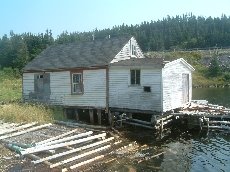
Fishing stages to be restored


The Trinity Historical Society has received funding from the Fisheries Heritage Preservation Program (FHPP), to restore three fishing properties in Trinity. The FHPP, administered by the Heritage Foundation of Newfoundland and Labrador is a program developed to assist in the preservation and presentation of the province?s fisheries heritage.

The buildings to be restored are the stages of Thomas Spurrell and Francis Toope and the slipway belonging to Boyd Coleridge. These structures are in need of restoration in order to stabilize them and ensure that they are preserved for the future.


Project Coordinator Jim Miller says there are very few fishing stages left in Trinity, adding it would be a shame to lose those that are left.

"The preservation of these community buildings is of utmost importance to the Historical Society as they tell a part of the town?s history that is not told elsewhere in the town," says Miller

More on this : Fishing stages to be restored

2006/06/05

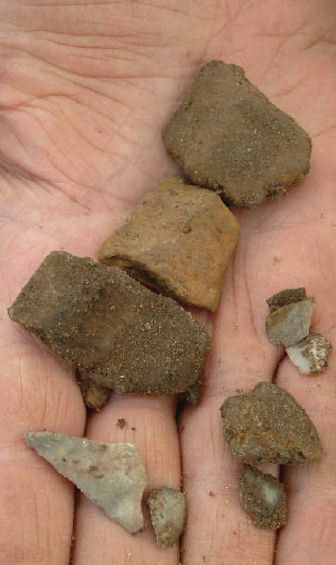
IPFW students digging into prehistoric Indiana


The land is only yards away from a practice firing range, owned by the Kosko Conservation & Sportsman, a local gun club. The same place where people recreationally practice their shot is where Indiana University-Purdue University Fort Wayne archeology researchers believe Paleoindians killed caribou and wild turkeys with spears to survive 10,000 years ago.

To the average person who drives Fox Farm Road, it?s almost unimaginable that this plot used to be a sand dune, home to communities of Paleoindian people. The Paleoindians, who lived in North America between 11,000 and 8,000 B.C., were the founders of the American Indian cultures that were prevalent in northeast Indiana for the next 10,000 years.

It?s on that plot of land where IPFW archaeology researchers are furthering their research of this time period, allowing students to hone their excavation skills.

In the past five years, the IPFW Archaeological Survey has made quite a name for itself in Indiana.

More of this :
IPFW students digging into prehistoric Indiana